
Xani brings her bold new commission KOŁACZ to MIJF
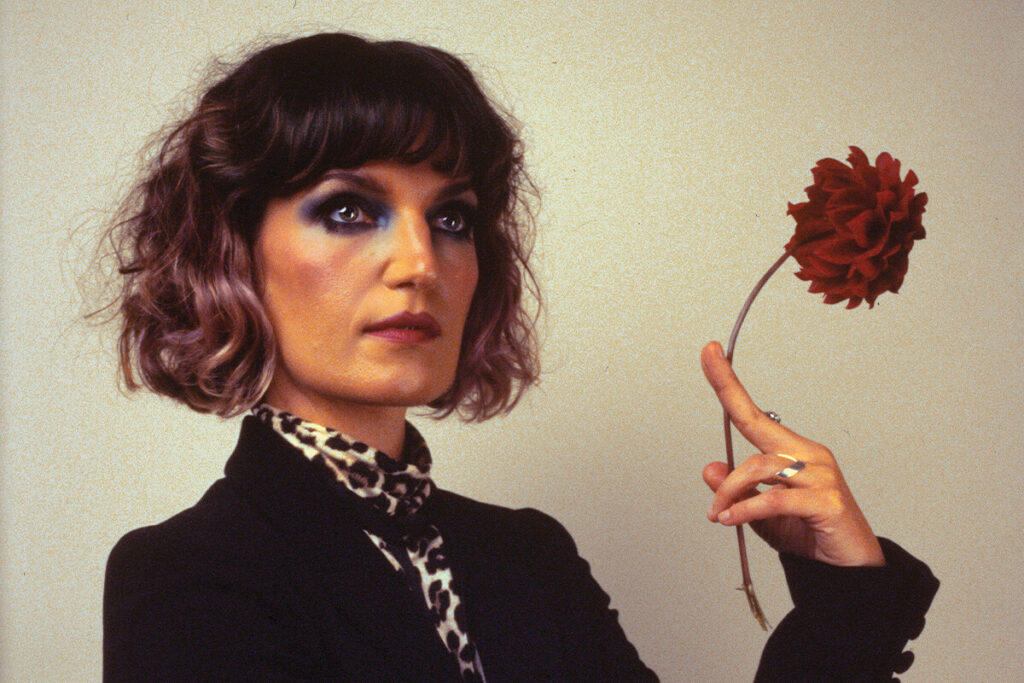
One of Melbourne’s most distinctive musicians, Xani Kolac, presents her highly anticipated world-premiere commission, KOŁACZ at the 2026 Melbourne International Jazz Festival.
This creative collaboration features a stellar ensemble: multi-instrumentalist Helen Svoboda, long-time collaborator Justin Olsson and in her Australian debut, Estonian-Swedish artist Tuulikki Bartosik.
We chatted with Xani about her musical journey and how KOŁACZ came to be:
MIJF: What can audiences expect to experience at your Melbourne International Jazz Festival performance?
XANI:
My work is called KOŁACZ and it asks the central question: where do I belong? The name is the traditional spelling of my surname, which lost its diacritic and the Z through processes of trying to assimilate into discriminatory Australian society. Last year, I obtained my Polish citizenship, and I went to Poland for the first time this year. I wanted to go there and see if I felt a sense of belonging, and I wrote the work when I returned to Australia. I don’t adhere to any kind of categorisation or boxing in of my work of genre – this work draws upon my diverse influences, but also has my love of improvisation at its core.
I’ve also been working with a dramaturg, Roslyn Oades, and this is the first time I’ve worked with a dramaturg in my artistic practice. It’s really evolved how I think about work. So hopefully audiences can expect to see and hear a work that has meaning and story and the potential for exploration.
MIJF: Is there a particular element of the work that you’re especially excited for people to experience live?
XANI:
Yes, so on the day, that will be the first time that all four of us have come together to perform. What that does is set up the room for surprise and it also means that we’re all going to be listening so intently, exercising trust and trying to move, play and explore like a little collective trying to connect up together.
This was all intentional because I wanted the work to be something that could be performed again and again in lots of different environments.
MIJF: Can you tell us a little bit about the process of developing the work – especially working across different continents?
XANI:
My particular interest within improvised music, and I guess in music as a whole, is looking at feminist and decolonising practices and how to destabilise hierarchy. Because my central question of the work is “where do I belong?”, I set out to create these little maps in the compositional process. The maps have direction in them – it might be notated motifs or melodic fragments that can be interpreted by each collaborating musician in their own way, probably similar to a Terry Riley In C like chart. And then there’s bits that are notated with big, grand melodies and harmonic progressions, drawing on my influences of Chopin and Morricone, Vangelis and Piazzolla.
There’s room for big open sections where there are only subtle directions and it allows for encounters with my collaborators that will be about surprise, risk and taking detours. Earlier this year, I went to Tallinn in Estonia and did some sessions with Tuulikki Bartosik, who’s going to be performing on accordion and a traditional Estonian instrument called a kannel. I have been doing similar little tests with the collaborators that are based here in Naarm. I wanted this work to be something that could be performed again and again with different collaborators and with people who speak different languages as their first language.
MIJF: What’s the overall experience of the Take Note program been like so far?
XANI:
It’s been a gift, really. It’s very rare to have 12 months of time to work on a project, knowing that it will have a premiere and having support and encouragement from an entire team of people. It’s been so nice to have the Melbourne International Jazz Festival team cheering me on the whole way and helping to make my vision for this work come true. I’ve also really enjoyed speaking to past Take Note leaders and asking them about their experiences and hold their wisdom and guidance with me as I go through my year as Take Note leader.
Conducting workshops in high schools has been very enriching. I always set out to specifically encourage students who play orchestral instruments and who have grown up reading music or performing classical music to have the courage to improvise. A lot of them have deep fears about this, but watching them take the challenge on and then lead their own ensembles has been wonderful to watch.
MIJF: And what’s next for you?
XANI:
It’s pretty incredible that I get to premiere KOŁACZ internationally at the EFG London Jazz Festival. While I’m in Europe, I’ll be performing at some shows in Germany and playing at a music festival in Camden at the end of the month. I’ve also been on tour with Kate Miller-Heidke lately and I will finish up that tour in January. It’s been a whirlwind and I’ve just been so fortunate the hard work is paying off.
MIJF: What are the other shows in this year’s festival that you’re excited about?
XANI:
Every year I do think that the Melbourne International Jazz Festival is my favourite festival. It’s at a perfect time of year and the people that come out — the audiences are always very interesting. A lot of them don’t really see jazz or improvised music throughout the year but then they just turn up. That’s what I love, which is that the genre is quite broad and expansive. I love seeing string players at the Jazz Festival and I’m excited to see Tomeka Reid at The JazzLab. Local artists such as Resonance, a powerful improv quartet, Australian Art Orchestra’s new work At Bunjil Place. Then there’s BIGYUKI, when I was in London earlier this year, I saw him and he was amazing! As a collaborator he was listening so intently and coming up with the most imaginative lines and phrasing, but what stuck with me was the sounds that he would select. He’s got great sense of humour on stage and is so virtuosic. I was really blown away and his solos made me extremely excited.
MIJF: Any final words for MIJF audiences about your show?
XANI:
I hope that audiences are able to engage with it and that it prompts them to think about belonging. It really brought up things for me about whether we can belong anywhere — physically, geographically, or genealogically — or whether belonging is something that is encounter that happens for a moment in time.
I hope that when we perform this work that the audience feels like they can and should belong in that room with us all together, because we’ll be creating something that we’ve never created before and we can’t do that without the audience’s energy in the room too.
Xani performs at Howler, Saturday 17 October. Tickets are available at the MIJF website